


Dual-Frequency Positioning Technology: From "Positioning" to "Precise Positioning"
The dual-frequency positioning technology means dual frequency GNSS,such as dual frequency GPS,dual frequency Beidou,Galileo,Glonass.
All electric bicycles used for urban logistics,commercial rentals,and other operational activities should be equipped with a dual-frequency positioning module.For other types of electric bikes,a dual-frequency module should be designed and offered as an optional feature for consumers at the time of sale.This module must support independent positioning and be capable of receiving and processing dual-frequency signals.Moving from"single-frequency"to"dual-frequency"might seem like just adding one more frequency,but it's actually a significant upgrade in positioning technology.
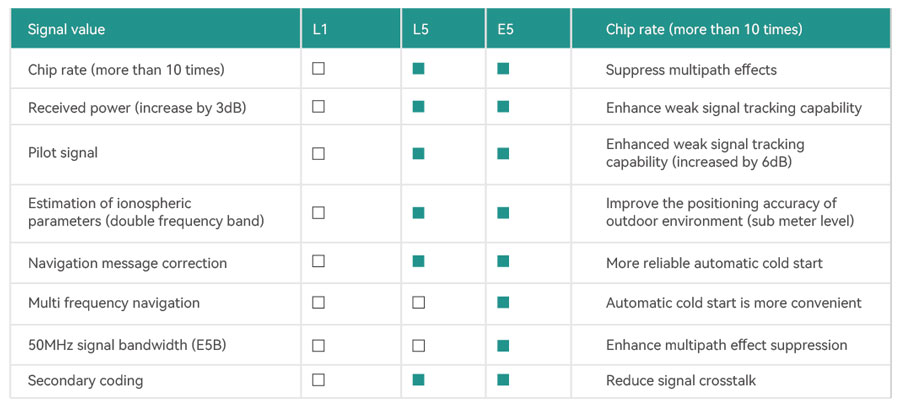
Single-Frequency:The"Three Big Challenges"
Ionospheric Delay: The signal is prone to refraction when passing through the ionosphere,making it difficult to autonomously correct delay errors.As a result,the actual positioning deviation is usually between 5-15 meters.
Multipath Interference: When the signal encounters buildings,bridges,trees,and other objects,it reflects.A single-frequency receiver cannot distinguish between"direct"and"reflected"signals,further amplifying the positioning error.
Weak Signal"Flying Points": Only receiving single-frequency signals means fewer visible satellites.In scenarios like high-rise buildings or tree-covered areas,the system frequently loses the lock,causing"flying points"on the trajectory.
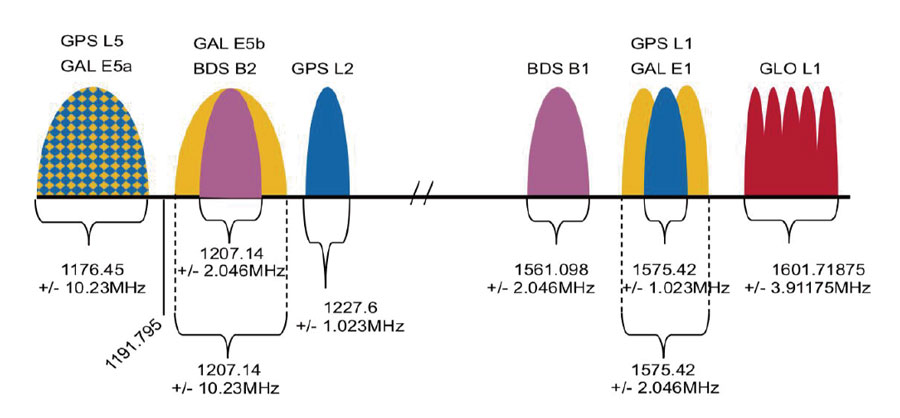
The Significant Advantages of Dual-Frequency Positioning Technology
Enhanced Ionospheric Error Correction: By utilizing the"refraction differences"of B1C and B2a signals in the ionosphere,algorithms can model and cancel out delay errors,significantly improving positioning accuracy.
Improved Multipath Interference Suppression: The dual-frequency principle,based on phase differences,allows for the precise elimination of reflected signals.This enhances interference suppression,ensuring stable direct signal locking even in dense urban areas or tree-lined streets.
More Stable in Weak Signal Areas: Dual-frequency allows simultaneous reception of both B1C and B2a satellite signals,increasing the number of visible satellites.Moreover,the B2a frequency has a higher chip rate,which improves anti-jamming capabilities and reduces signal loss in weak signal areas.
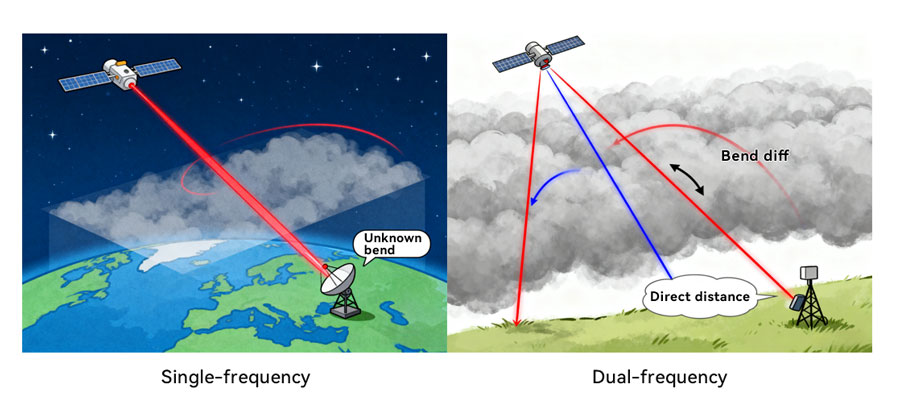
Example for Better Understanding:
Think of dual-frequency satellite signals as"two beams of different colored lasers"directed at the ground.
Single-frequency: There's only the red laser.It bends when passing through fog(ionosphere),but you don't know how much it bends.
Dual-frequency: You have both red and blue lasers.The fog bends them differently.By comparing the bending difference between the two,you can accurately restore the real path.
The result: Even in the"signal fog"of cities,dual-frequency can still output stable and continuous trajectories.
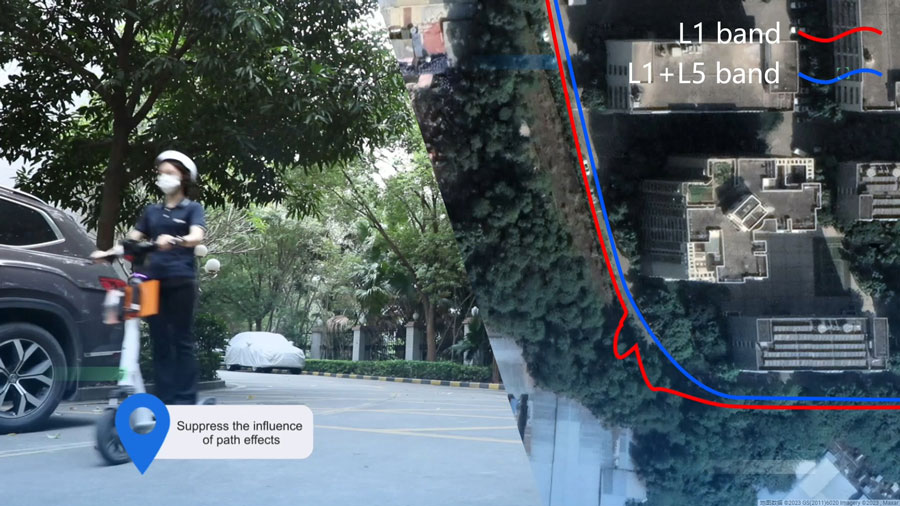
Comparison of Single-Frequency and Dual-Frequency Trajectories:
Single-Frequency Trajectory
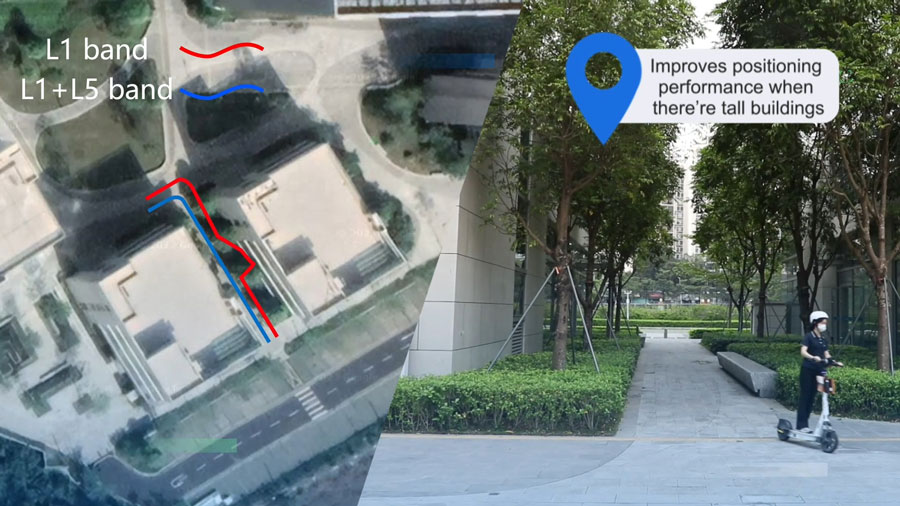
Dual-Frequency Trajectory
What Position recommended of IoT GPS tracker that is equipped with dual-frequency for two-wheelers?
Best Position for Installation–Front of the Vehicle:Avoid metal shielding and battery interference.In open areas,dual-frequency positioning errors are minimal.
Second-best Position–Pedal B:But keep it more than 3 cm away from metal brackets to reduce interference.
Worst Position–Seat Bucket Area:Surrounded by metal and affected by battery interference,even dual-frequency errors increase,so it's not recommended as the primary location.
Dual-Frequency Shows Clear Overall Advantages:Regardless of the installation position,dual-frequency positioning accuracy is higher than single-frequency,especially in complex environments,with stronger anti-interference capabilities.